

Keebler O’Boises
O’Boises are O'Boisterous!

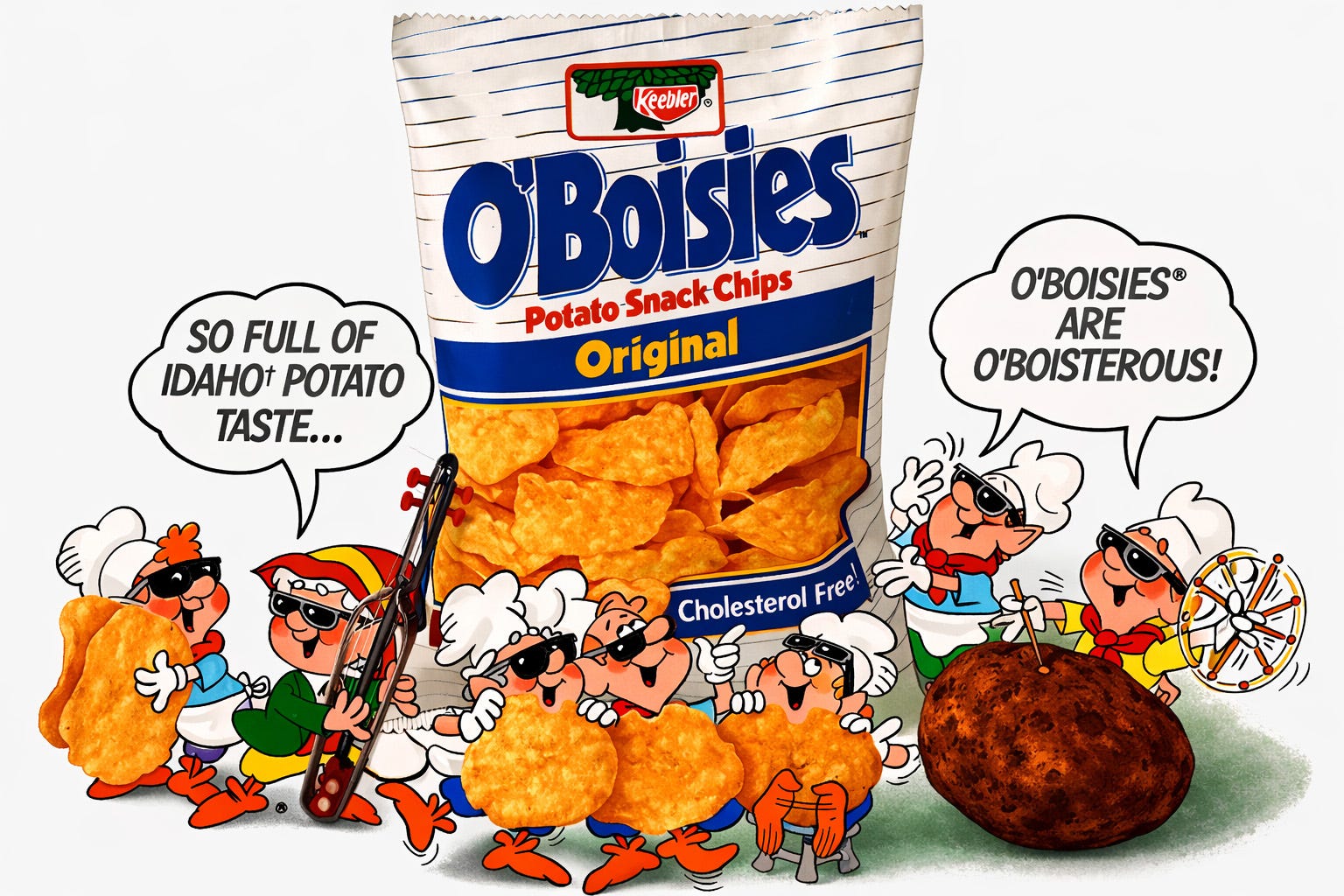
By the time O’Boises reached the Acme Market in my town in 1988, I was ready for them. I had already been hearing about these extra crunchy Keebler chips, and I was the kind of kid who did not need much convincing when Keebler put out something new. I bought a bag, opened it, and knew right away this was not the same experience as a standard potato chip. O’Boises had a thicker crunch, a different look, and enough novelty to make a real impression.
O’Boises were a manufactured potato snack chip, which put them in the same technical category as Pringles rather than say a bag of Lay’s. They were made from a dough of potato material that was shaped and cooked instead of sliced from a whole potato. What came out of that process was a chip with noticeable thickness, a light airy interior full of small bubbles, and a crunch that was louder and more satisfying than a standard thin chip. Contemporary reviewers (and me) noted that they were thicker than expected, less oily than most chips, and especially good for dipping because they did not break apart easily. That thickness also meant fewer broken chips in the bag.
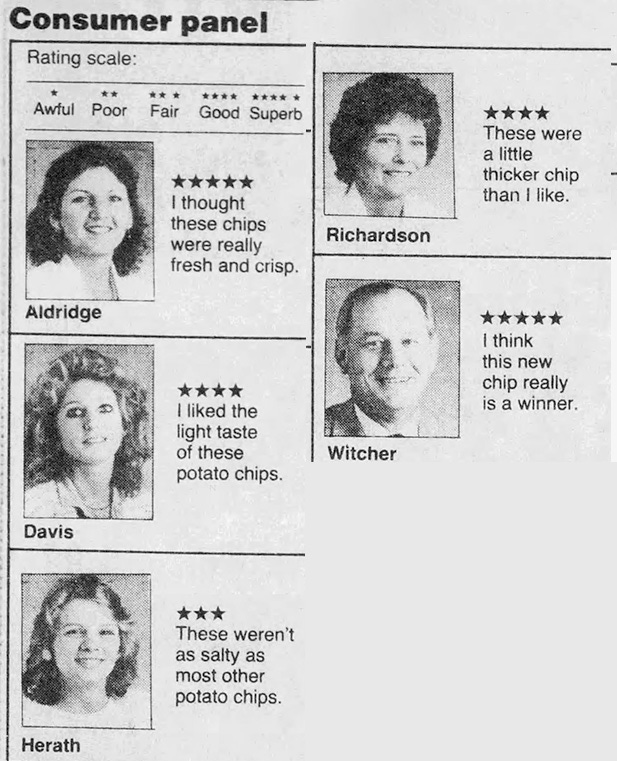
A 1988 consumer panel review in the Jacksonville Journal tested the Original flavor and found the response split but enthusiastic on texture. Several panelists specifically compared them to Pringles in terms of how they were built. One called them the closest thing to Pringles she had found. Another said the crunch and freshness were the selling point. A third noted they were less salty than most chips, which was either a virtue or a problem depending on who you asked.
The technology behind O’Boises came from Miles Willard and his Idaho Falls firm, Miles Willard Technologies. Willard had spent years at the USDA before founding his own company, and he had become one of the primary figures in fabricated potato snacks. His portfolio included Tato Skins, Hula Hoops in the United Kingdom, Ripplin’s, and Chachos, among others. The specific construction used for O’Boises was a dual-sheeted process, meaning two thin potato layers were pressed together before cooking. That gave the chip its internal air pockets, its distinctive texture, and a notably stronger potato flavor than a single-sheet crisp would have delivered. The Bluffton, Indiana plant where O’Boises were eventually produced was described years later, when the brand changed hands, as the only facility in the country with that dual-sheeted capability.
Keebler introduced O’Boises in early 1988. A Chicago Tribune marketing column from February 26, 1988 reported that O’Boises and Suncheros, Keebler’s new tortilla chip, were both set to begin appearing in selected markets in mid-March, with national distribution to follow within a few months. The column confirmed that the O’Boises name was a direct reference to Boise, Idaho’s capital, and that the chips were manufactured from one hundred percent Idaho potatoes. The connection to Idaho potato country was not incidental. People’s association with Idaho was strong and the names made for a playful reference.
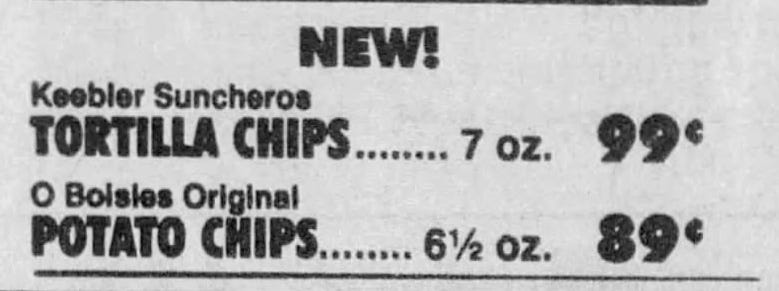
The Boise area introduction came on March 3, 1988. By March 9, a Hersh’s Markets circular in Allentown, Pennsylvania was already listing O’Boises Original Potato Chips as new at 89 cents for a 6.5-ounce bag. National rollout happened fast. The launch flavors were Original and Sour Cream and Onion. A Cheddar variety appeared in grocery advertising by 1993, and some store circulars also list a Barbecue option at various points. The Original was the baseline, and the Sour Cream and Onion became the one most people cite when they remember the brand.
O’Boises weren’t just a modest success. They were one of the most successful snack launches of the decade.
In their first year on the market, O’Boises and Suncheros together generated roughly one hundred million dollars in combined sales, according to Keebler’s own public relations statements cited in Prepared Foods in 1989. O’Boises was the bigger performer of the two. By May of 1989, a Chicago Tribune marketing column noted that O’Boises had done such strong business with grocery chains that retailers were unusually receptive to whatever Keebler brought them next. The column described O’Boises specifically as the product that had proven Keebler could move salty snacks the way it moved cookies.
By late 1988, Keebler’s total snack food sales, including Tato Skins, O’Boises, and Suncheros, had reached about two hundred million dollars annually after less than three years in the market, according to Crain’s Chicago Business. The company held roughly five percent of the total salty snack market, which was worth about four billion dollars a year at the time. A 1991 market share breakdown in the Orlando Sentinel still put Keebler at five percent, listing O’Boises alongside Ripplin’s and Tato Skins as its main brands. For context, Frito Lay held forty two percent and Borden held nine, which shows how much ground Keebler had managed to gain in a business it had entered from scratch only about eight years earlier. O’Boises was one of the clearest signs that the company’s push into salty snacks was working.
The sales figure that gets cited most often in later years comes from a 2009 Inventure Group earnings call, when CEO Terry McDaniel mentioned having been told O’Boises was a three hundred million dollar brand at its peak. He flagged that as secondhand information rather than confirmed fact. What is documented is that the Keebler Salty Snacks division as a whole reported about one hundred ninety-two million dollars in total sales in 1995, the year the division went up for sale.
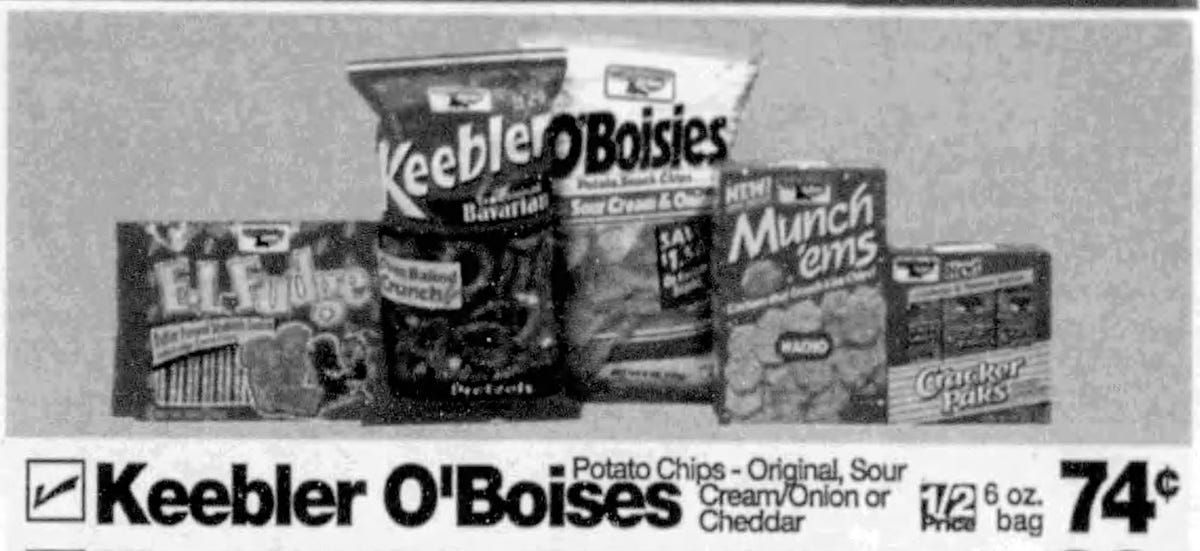
The pricing trail from newspaper advertising tells a useful story about how the brand moved through its run. The 89 cent entry price in March 1988 was for a 6.5-ounce bag. By October 1991, the same size was still priced at 99 cents in some markets. A December 1991 ad introduced a family size of 14.5 ounces at $1.99, which suggests Keebler was confident enough in the brand by then to expand the format. A 1992 coupon offered buy-one-get-one-free on O’Boises at a retail value of $1.59 per bag. By 1993, sale pricing had dropped to 74 cents for 6 ounces. By 1998, after the brand had changed hands, a Pharos-Tribune circular listed a 6-ounce bag for 79 cents, which suggests the product was still moving but not at a premium.
Keebler was not operating in a quiet corner of the market. Frito-Lay was the dominant force in salty snacks throughout this period, and the competition was described repeatedly in trade coverage as intense. By March 1991, Keebler CEO Thomas Garvin was publicly declaring the company’s ambition to become the number two salty snack maker in the country, a position it was not yet holding despite the success of O’Boises and its companion brands.
The pressure from Frito-Lay was relentless and expensive. Anheuser-Busch’s Eagle Snacks had also entered the market aggressively, which compressed margins across the board. When the Eagle division was abruptly shut down in February 1996, it left a significant void, but by that point Keebler had already been moving toward exiting salty snacks entirely. Industry analysts in June 1995 attributed Keebler’s retreat to the difficulty of competing against Frito-Lay’s scale.
Also, a bigger trend was happening for the company. Keebler’s British parent, United Biscuits Holdings, had been selling off divisions through the mid-nineties. The cookie and cracker business was sold to Flowers Industries and the Invus Group. The salty snacks division, including the O’Boises and Ripplin’s brand names, the Haltom City, Texas factory, and a plant in Oxford, Pennsylvania, was put up for sale in mid-1995. The Haltom City facility had been a $25 million, 145,000-square-foot plant that began operations in 1987, the year before O’Boises launched. By late November 1995, workers were being sent home as the sale process played out.
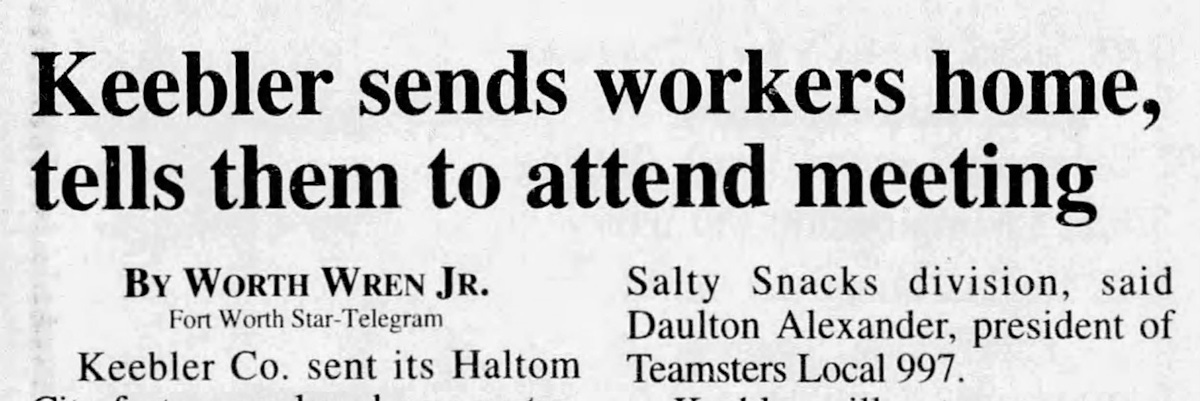
The O’Boises line was ultimately sold. By 1997 Keebler had divested it. The brand and production technology passed through several hands before landing with Poore Brothers, which later became Inventure Foods, operating out of the Bluffton, Indiana facility.
A 1998 Capital Press article on Miles Willard Technologies noted that Wabash Foods in Bluffton, Indiana was trying to restart production at a former Keebler plant. In hindsight, that looks like an early sign that the O’Boises process and the plant built around it still had value. The line eventually passed through Poore Brothers and then Inventure, which was preparing a relaunch by early 2009 and still emphasizing the product’s unusual construction and the role of the Bluffton facility.
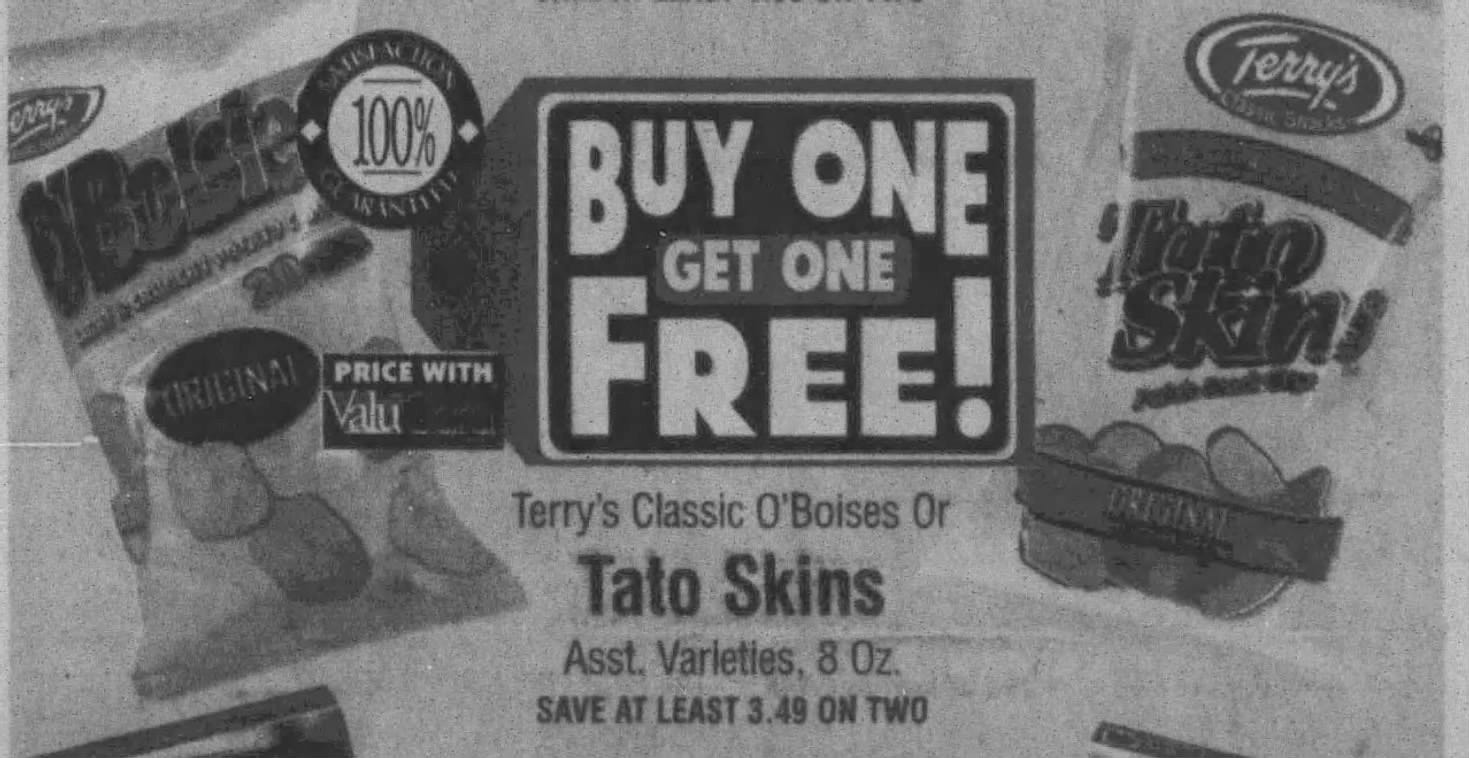
Whether that relaunch ever turned into a full scale return is less clear. But O’Boises were not just a paper plan. A December 3, 2009 ad in The LaFollette Press shows Terry’s Classic O’Boises back on sale in 8 ounce bags as part of a buy one get one free promotion. That is enough to show the brand made it back onto store shelves, even if the long term reach of the comeback is harder to measure. I could only find one other mention in 2010 and nothing after that.
A lot of late eighties snacks are remembered because of when we ate them, and there is nothing wrong with that. But O’Boises stuck with me for another reason. They really did stand out. The crunch was thicker and louder, the potato flavor came through more clearly, and the shape held together better than most chips in the snack aisle. The sales suggest plenty of other people noticed too. O’Boises moved in serious volume, earned national shelf space, and helped show that Keebler could do more than cookies and crackers. Even after Keebler left the brand behind, someone else saw enough value in it to bring it back. That is probably why it still lingers in memory. Not just because of the logo or the commercials, but because the chip itself was good enough to be remembered.
Man, I love potato skin snacks, in large part because they were always a rarity in my life growing up. We were a Pringles family. Not that I'm complaining.
Insane how Keebler went from being such a major market share player to barely there in just a few years. As a Xennial Keebler sweet and salty snacks were an integral part of my late 80s/early 90s childhood. And I always thought their products were better quality than the other national brands.