

The History of Muttley
How a muttering, medal chasing sidekick became a cartoon favorite

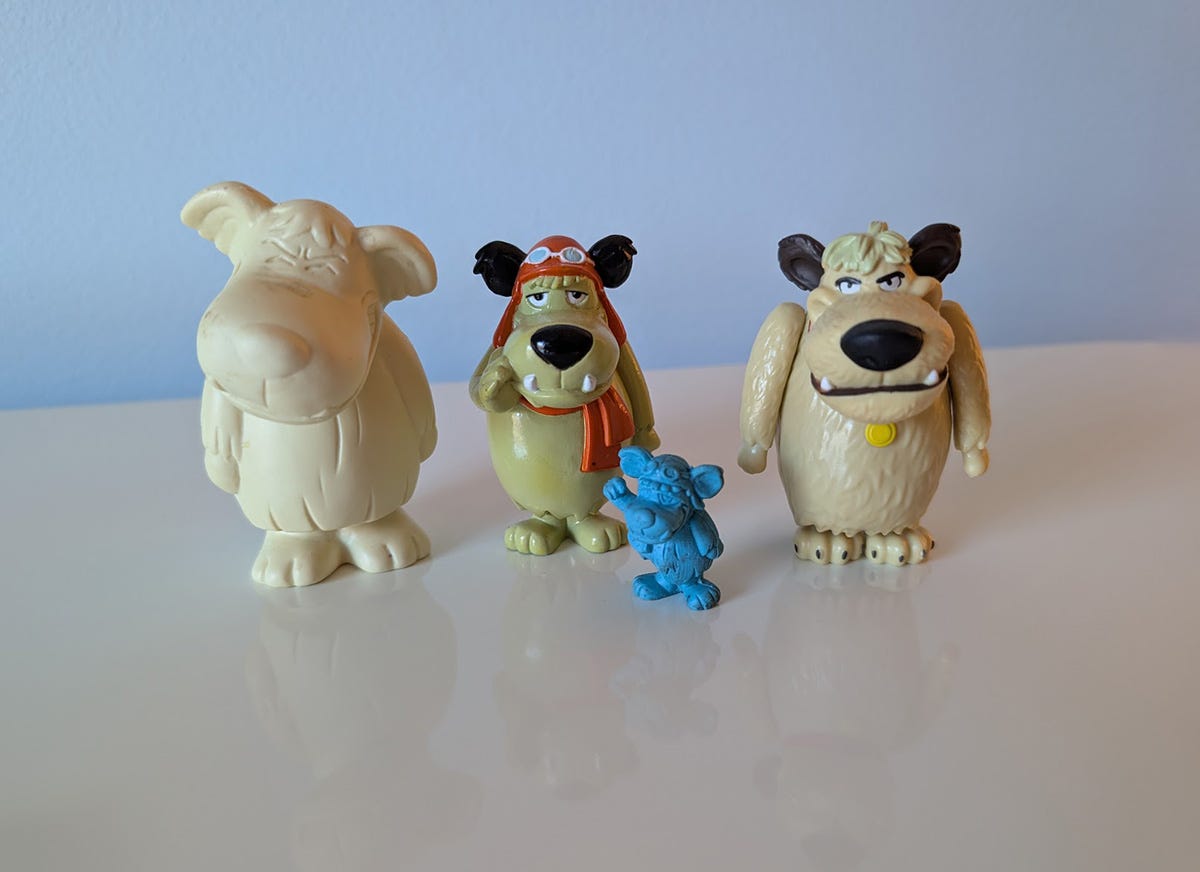
My sister had a real talent for finding something about you and shining a spotlight on it. When we were kids, she decided that my laugh sounded exactly like Muttley. Not kind of like Muttley, but for a long time, exactly like Muttley. That wheezing, gasping, barely contained snicker that the cartoon dog did whenever Dick Dastardly fell out of a plane or got bonked on the head. She would demonstrate, doing her best impression of my laugh back at me, which was nothing like Muttley. This of course made here crack up. Now I had been in her crosshairs before and realized I had two choices. I could be embarrassed, or embrace it. I chose to embrace it, partly because I already loved Muttley, and partly because she wasn’t wrong.
I had been watching Muttley since I first started became addicted to Saturday morning cartoons. He was easy to love a dog with sense of humor and perfect comic timing. He just watched, waited, and when the moment arrived, he laughed. There was something deeply satisfying about that. Muttley was, depending on your perspective, either the worst sidekick in cartoon history or the best. I always thought he was the best.
Muttley was created by Iwao Takamoto, one of the most important character designers in the history of American animation. Takamoto had an unusual path to that job. He learned to draw while incarcerated at the Manzanar internment camp during World War II, where an older artist took him under his wing. After the war he went to work at Disney, then moved to Hanna-Barbera, where he became the go-to designer for some of the studio’s most recognizable characters, including Scooby-Doo and Muttley.
Muttley first appeared in September 1968, in the premiere of Wacky Races on CBS. The show was inspired by the 1965 comedy film The Great Race, and Muttley was modeled on Max Meen, the henchman played in that film by Peter Falk. His partner Dick Dastardly was the cartoon equivalent of Professor Fate, the villain Jack Lemmon played in the same movie (more about Falk later). Wacky Races was a co-production between Hanna-Barbera and Heatter-Quigley Productions, a partnership that would have consequences for the character’s future.
As his name suggests, Muttley is a mixed breed. In a Wacky Races episode called “Dash to Delaware,” he is specifically identified as a mix of bloodhound, pointer, Airedale, and hunting dog. In the original series he wore only a collar. This would change in futured appearances. His primary job in the serious was to antagonize Dick Dastardly by snickering and occasionally muttering barely audible complaints about Dastardly under his breath. Things that sounded approximately like “snazza frazza rashin’ fashin’ Rick Rastardly.” It wasn’t a lot, but this dog had charisma and quickly became a fan favorite.
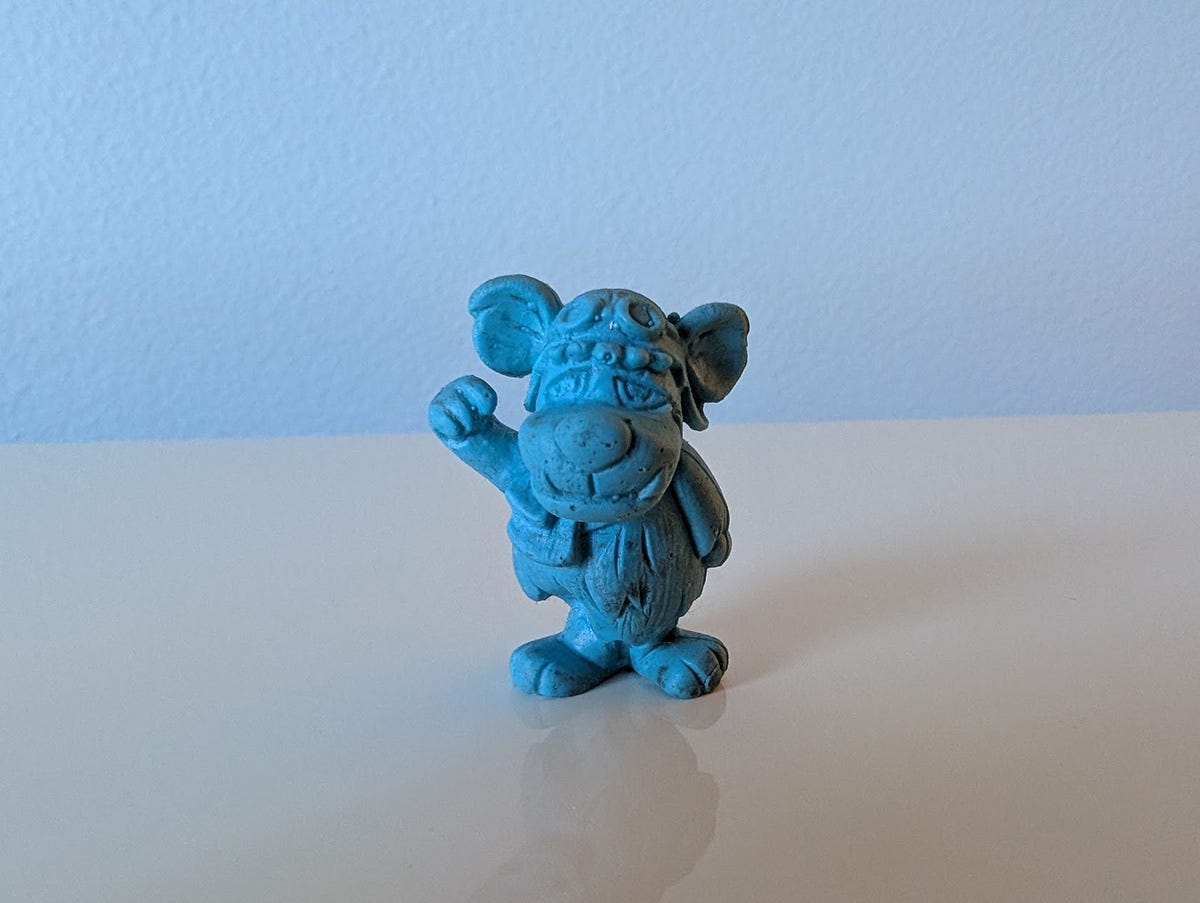
One of the things that made him unique was the voice and that laugh. The laugh did not begin with Muttley. It began with Don Messick, and Messick had been using versions of it for years before the character existed.
Messick was born in Buffalo in 1926 and raised in Baltimore, where he started doing radio at fifteen. He wanted to be a ventriloquist, which turned out to be good training for a career that would require him to produce an extraordinary range of sounds. By the time he arrived at Hanna-Barbera, he had already found the wheezing snicker and deployed it for a string of minor characters including a mischievous dog in Huckleberry Hound, a troublemaker named Snuggles in Quick Draw McGraw, and a character called Griswold in Top Cat. I like to think that each time he used it, the laugh got a little more refined, a little more specific. All leading up to the character who would own it.
When Muttley arrived, Messick finally had a character whose entire personality was wrapped up in this voice. The laugh wasn’t just a laugh, it was at the core of how Muttley would communicate. Muttley’s simple sounds conveyed a character who knew exactly how absurd the situation was and seemed to enjoy it.
Messick also voiced nearly everyone else in Dastardly and Muttley in Their Flying Machines (which I will talk about next), including the inventor Klunk, whose dialogue consisted entirely of mechanical noises and sound effects, and the pilot Zilly. He was doing most of the show by himself, with Paul Winchell handling Dick Dastardly and the General.
Messick stayed with the character until 1991, when a series of strokes sadly ended his career. He passed away in 1997. That laugh, though, kept going. Billy West, one of the most accomplished voice actors of his generation, took over the role and has continued it into the 2020s, including in the 2020 film Scoob!, which also used archival recordings of Messick for certain moments.
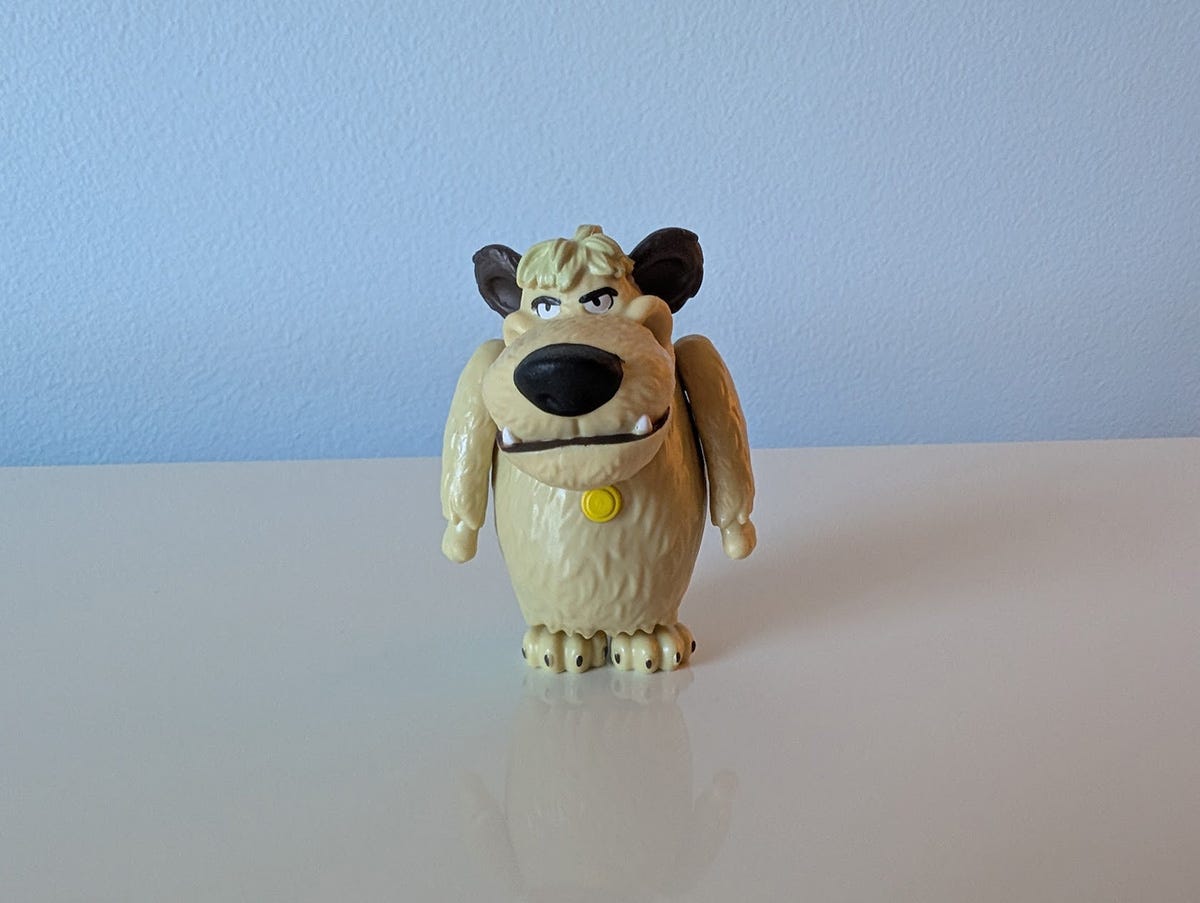
Wacky Races ended its original run in January 1969. By then, Fred Silverman, who oversaw children’s programming at CBS, had seen enough to know that Dick Dastardly and Muttley were the show’s breakout stars. He asked Hanna-Barbera to build a spinoff around them. The result premiered on September 13, 1969: Dastardly and Muttley in Their Flying Machines.
The title was a play on the 1965 British film Those Magnificent Men in Their Flying Machines. The original working title had simply been “Stop That Pigeon,” which was also the name of the show’s theme song. On the show, Dick Dastardly commands the Vulture Squadron, a team of incompetent World War I-era aviators whose mission is to intercept a carrier pigeon named Yankee Doodle Pigeon before he can deliver his messages. They fail every single time. The pigeon wins. Dastardly rages. Muttley laughs.
The show’s connection to actual history was not accidental. Carrier pigeons were a an important part of World War I, used to carry messages when other communication lines were cut. The most famous American example was Cher Ami, who saved nearly 200 soldiers in 1918 by delivering a message despite being shot. Yankee Doodle Pigeon, painted red, white, and blue, was clearly a tribute to this heroic bird.
In the spinoff, Muttley picked up two important new traits. He could fly by spinning his tail like a helicopter. This is a skill that came in useful whenever Dastardly was in freefall and needed to be caught, which was often. He also became obsessed with medals. Before doing anything Dastardly asked of him, Muttley would demand a medal. Dastardly would either promise one and that would make Muttley very happy. Through his desire to be seen as a hero (with medals), we get a glimpse of how Muttley wants to be seen.
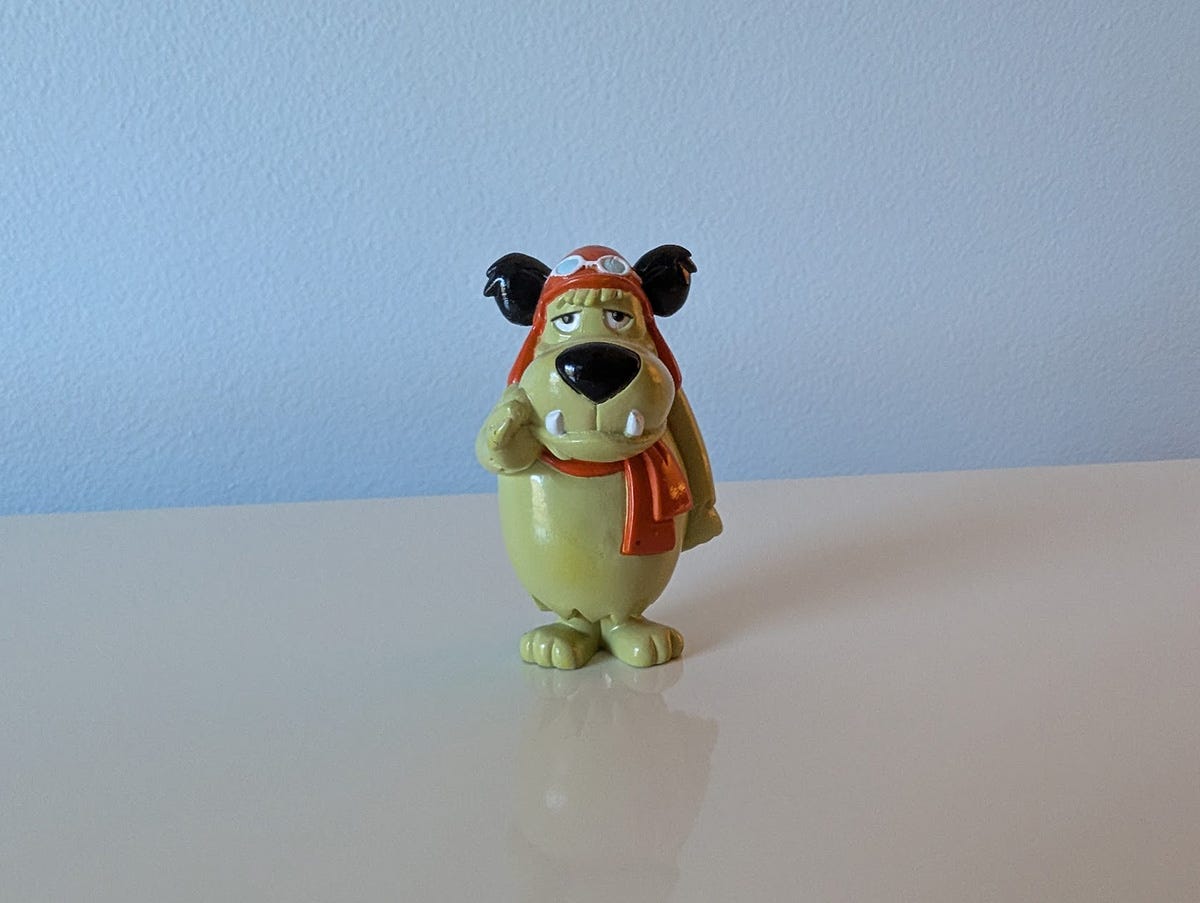
This is confirmed in each episode, which also included a segment called “Magnificent Muttley.” In them, Muttley daydreamed about himself as the hero of various adventures, with Dastardly cast as the villain. These segments appear to be a reference to the Secret Life of Walter Mitty, and they gave Muttley something rare for a cartoon character of the time, a fantasy life. I am fascinated that Muttley wasn’t satisfied with his life. That he wanted better, but the most effective way he could express this was through daydreaming. It makes him very relatable.
What made people love Muttley was not his competence. It was the thing a letter writer to the Kalamazoo Gazette identified in April 1970, pushing back against a neighbor who had complained about the show. The writer, a man named John Eastman, called himself “a sporadically intelligent adult” and made the case plainly: Muttley “chuckles up his sleeve when Dastardly invariably fails.” Eastman gets Muttley and understand that Muttley is a rare character, one that is self-aware. He is on the wrong side and he knows it, and every time the wrong side loses, he lets you know he knew it all along.
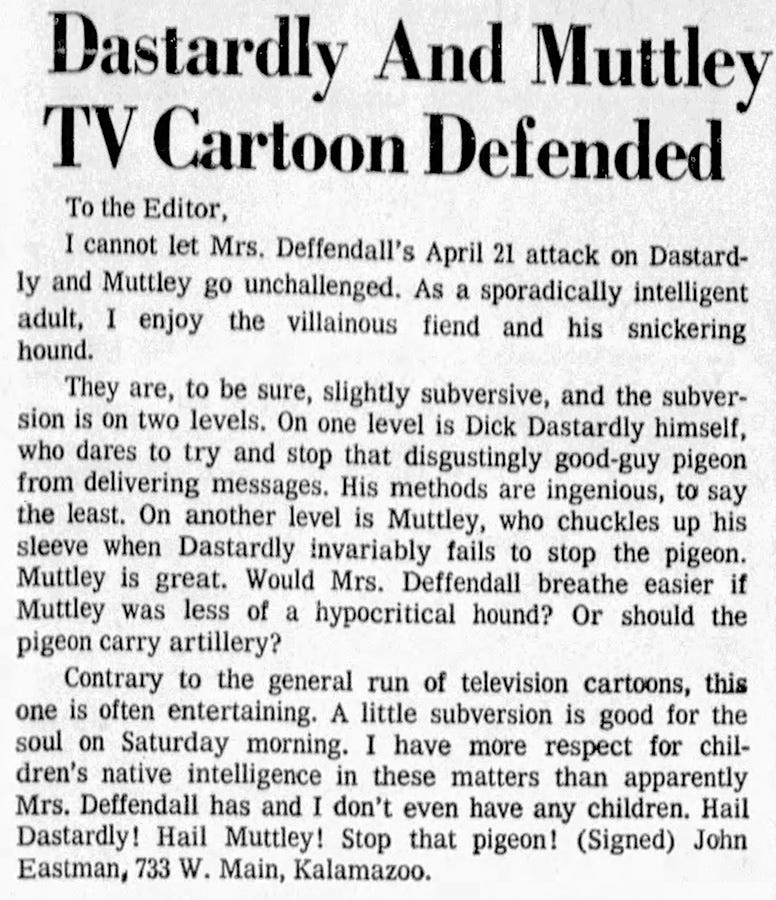
He is the one character on the show that the audience can properly identify with, his laugh is our laugh. When things go wrong for ol’ Dastardly and Muttley laughs, it almost functions as a laugh track, letting little kids know that what’s happening is something we should all be enjoying.
The show ran 17 episodes on CBS from September 1969 through January 1970, then moved into syndication from 1976 to 1982. That is where a whole new generation found it. William Hanna, in a September 1969 interview, noted that Hanna-Barbera programming was being seen in dozens of countries around the world. Dastardly and Muttley was part of that reach. In Japan, where Hanna-Barbera cartoons had been popular since the early 1960s, the show aired under a different set of names. Muttley became Ken-Ken. Dick Dastardly became “Sukaikido Buraku Maō,” which translates roughly as The Skykid, Black Devil. Dastardly’s Japanese voice actor was Chikao Otsuka, father of Akio Otsuka, who would go on to voice Solid Snake in the Metal Gear Solid video game series.
When Hayao Miyazaki made Howl’s Moving Castle in 2004, one of its characters, an adorable dog named Heen who could fly, was described by critics as having “the Muttley cough.” Whether that was an intentional tribute or simply a sign of how completely that sound had been absorbed into the shared vocabulary of animation, it is difficult to say. But the reference was immediately understood.
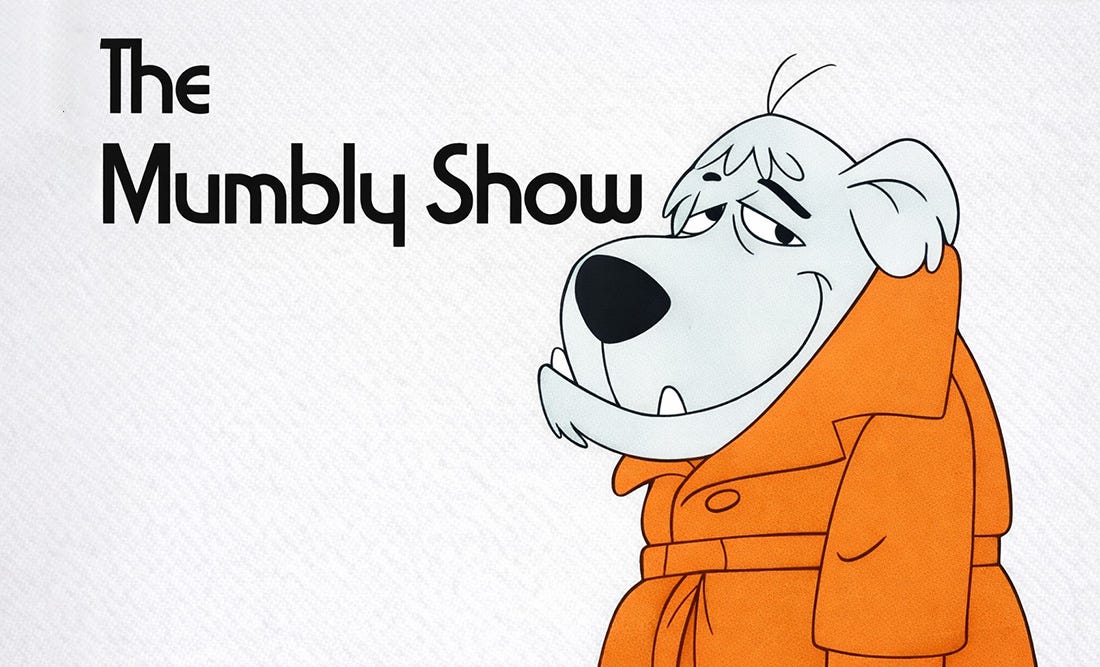
In 1976, Hanna-Barbera introduced a new character named Mumbly. To anyone who had watched Wacky Races or Flying Machines, the resemblance to Muttley was impossible to miss. The same look, a similar grumbling mumble, same Don Messick voice. But Mumbly was not Muttley.
The reason for the distinction came down to ownership. Wacky Races had been co-produced with Heatter-Quigley Productions, which meant the characters from that show, including Dastardly and Muttley, were jointly owned. When Hanna-Barbera wanted to use a similar dog character in new programming, they created a new one. Mumbly, in his original 1976 ABC series The Mumbly Cartoon Show, was a good guy, a detective in a trench coat who worked alongside a human partner named Chief Schnooker to catch criminals.
Now here is something interesting. Mumbly was a rumpled, mumbling, seemingly slow detective in a trench coat who turns out to be sharper than he looks. Sound familiar? Peter Falk had been playing Columbo since 1968. The parallel was not subtle. So Muttley had begun as a cartoon version of Peter Falk’s character Max Meen from The Great Race, and his near-twin Mumbly was modeled, at least in part, on Falk’s most famous role. Falk essentially helped to define both characters!
Mumbly’s detective series was not a ratings success and lasted only one season. He then resurfaced in Laff-A-Lympics in 1977, this time repositioned as a villain on the “Really Rottens” team, filling the role that Muttley could not fill because of the ownership issue. He was accompanied by a character called the Dread Baron, who strongly resembled Dick Dastardly. It was the same relationship, with different names. Its a shame, nothing against Mumbly, but it should have all been Muttley all along.
Muttley kept showing up. He appeared in Yogi’s Treasure Hunt in 1985, in Wake, Rattle, and Roll and the Fender Bender 500 segments in 1990 and 1991, in a teenage version in Yo Yogi!, and as a voice cameo in Duck Dodgers. The 2020 film Scoob! brought him back again. Each time, the character required almost no reintroduction. The laugh was enough.
What Muttley seems to understand is that the most interesting place in any story is usually not at the center of it, but just off to the side, watching it unfold. The hero is busy being heroic. The villain is busy with another bad plan. Muttley is there taking it all in, and finding the whole thing funny. He is not exactly cynical. He just sees the absurdity more clearly than anyone else around him. The plan is ridiculous. The chaos is inevitable. The pigeon is probably getting through. Muttley knows it, and he cannot help laughing.
That is part of what makes the laugh so memorable. It is not cruel, and it is not dismissive. It sounds like someone who already knows how this is going to go, and takes real pleasure in the gap between what people want to happen and what actually happens. Muttley is not outside the story, but he is never fully trapped inside its logic either. He is close enough to be part of the action, but far enough away to recognize how silly it all is.
My sister was not making some deeper observation when she said my laugh sounded like his. She just thought it was funny. But I was glad to hear it, because Muttley was my favorite character, and for a little while it felt like I shared something with him.
I grew out of the laugh, but not my affection for Muttley. If anything, I may like him more now. The laugh itself was a small thing, and it did not last, but for a little while it gave me a connection to a character I already loved. I am still glad I had that.
I still have a matchbox car with a detachable Mutley, which incredible in over 50 years I still have not lost. It looks nothing like the Double Zero despite been driven Mr Dastardly. I have no idea where I'm going with this.
Great piece!
Brilliant.