

McDonald’s Leaps and Bounds
The McDonald’s Playground That Wasn’t a McDonald’s

I had heard of Leaps and Bounds, but for years I could not have told you exactly what it was. I knew the name in that vague way you remember a place you saw advertised, or maybe passed in a mall, but never actually visited. I was too old to be the target audience when the first location opened in 1991, and too young to care about what McDonald's was doing as a business. It was only much later that I realized Leaps and Bounds was not just another indoor play place. It was McDonald's attempt to build an entirely separate chain around indoor play for children. Once I learned that, the whole thing became much more interesting to me.
McDonald’s had been in the playground business long before Leaps and Bounds. In 1972, the company debuted its first outdoor Playland at the Illinois State Fair, with equipment designed by Setmakers, a Hollywood set design firm, and built around the McDonaldland characters. Kids could climb on a Hamburglar swingset or crawl through an Officer Big Mac jail. It was a direct line from the television commercials into the physical world, and it worked. The Chula Vista, California location that installed an early version reported a jump of more than 60 percent in business after its playground opened.
By 1987, McDonald’s had moved the playgrounds indoors and rebranded them as PlayPlaces. By 1991, McDonald’s had become America’s largest playground operator with 3,000 PlayPlaces. The playgrounds had become so central to the brand’s appeal to families that someone, at some point, asked the obvious question. If kids love this so much, why limit it to thirty minutes after grabbing a Happy Meal?
McDonald’s spokesperson Terri Capatosto framed the whole idea in terms of the company’s existing tagline. “Instead of ‘Food, Folks and Fun’ with the emphasis on food, it’ll be ‘Fun, Folks, and Food’ with the emphasis on the fun part of it,” she told the Associated Press. The concept had a name, and it had a slogan. Leaps and Bounds. Play with Purpose.
The first location opened in September 1991 at Tower Crossing Mall in Naperville, Illinois, a suburb of Chicago. It was not attached to a McDonald’s restaurant and it would not carry the McDonald’s name. That was a deliberate decision. Kate Moran, an image consultant quoted in the Washington Post at the time, put it plainly. If the concept failed, it would not damage the golden arches. If it succeeded, it could stand on its own.
The play equipment had a credentialed designer behind it. James Rippe, a Massachusetts cardiologist and Harvard-trained physician who had spent years studying exercise physiology, designed the equipment with the goal of developing and challenging children’s motor and muscular skills while encouraging play and imagination. McDonald’s apparently wanted the developmental angle to have some credentials behind it.
Leaps and Bounds centers were built around large padded play areas, with some locations offering as much as 11,000 square feet of space. The layout was divided by age. Toddlers had their own area with rubber steps, domes, small slides, and ball pits. Younger kids had more interactive play pieces, while older kids could climb through larger tube mazes with multiple exits. Parents got in free, and admission for kids was $4.95. There was food, but it wasn’tt McDonald’s food. The concession stand served things like fresh fruit, turkey hot dogs, and pizza, which made the whole place feel intentionally separate from the parent company.
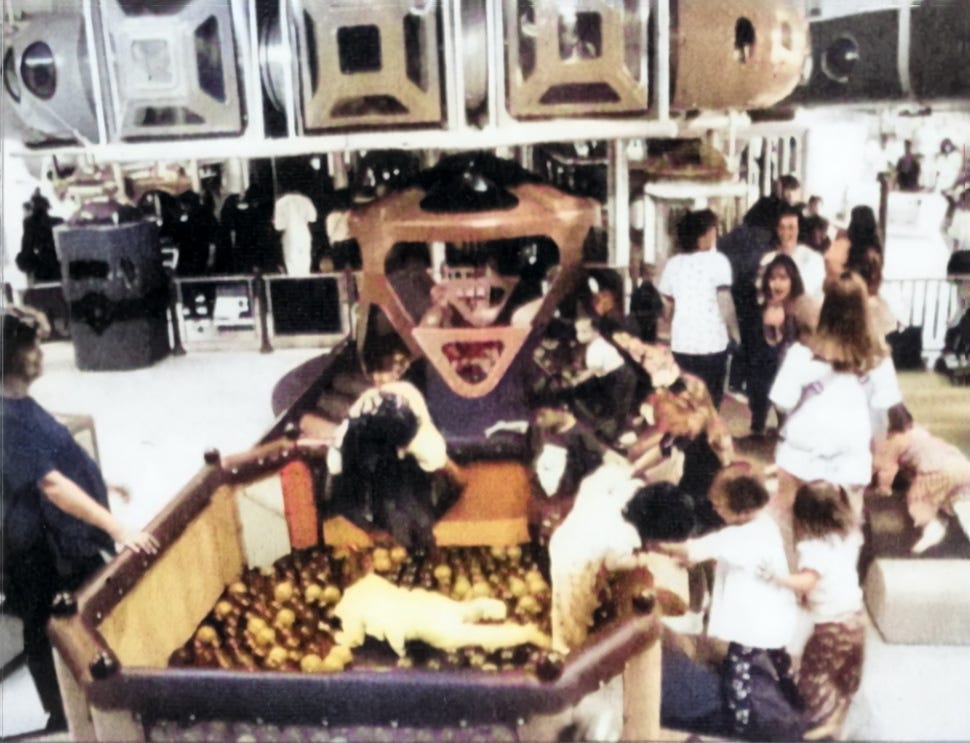
The nineties were a good moment to be in the children’s entertainment business, and McDonald’s knew it. With about 4 million children being born in the United States annually, Leaps and Bounds was aimed directly at an emerging market. Baby boomers were having children, and those parents were looking for structured, safe, supervised places for their kids to play. Public playgrounds were being dismantled across the country over liability concerns, leaving a gap that indoor pay-to-play centers were well-positioned to fill. Sallie Westheimer, executive director of Comprehensive Community Child Care, confirms this in an article in the Cincinnati Enquirer. Stating that McDonald’s had started Leaps and Bounds because parents were looking for a lot more productive things to do with their children. “There is a huge market for this, particularly when you consider the number of baby boomers with children,” she said.
There was also fear. These indoor playgrounds capitalized on the real fears of parents concerned about bad thing happening to children who might frequent playgrounds or parks. Many parents had come to view paying for a safe place for their kids to play as simply a fact of life in the nineties.
McDonald’s was not the first company with this idea. Discovery Zone had been doing something very similar since 1989, and it had a head start. By 1993, Discovery Zone had 70 centers and was still growing fast. It was a franchised operation, which gave it a different growth trajectory than Leaps and Bounds, which McDonald’s ran as an entirely company-owned chain. Both concepts offered tube mazes, ball pits, and age-segregated play areas. Both charged kids for admission and let parents in free. Both leaned on the same parental desire for safety. The meaningful difference was branding and backing. Discovery Zone was an independent company. Leaps and Bounds had one of the most recognized brands in the world quietly behind it, even if that brand’s name wasn’t on the door.
The expansion plan was ambitious from the start. By the end of 1993, McDonald’s planned to add 20 to 25 new Leaps and Bounds locations, and in 1994, another 40 to 50 were expected to follow. The Cincinnati location, opening in December 1992 in a former Hyundai auto dealership at 13,000 square feet, was chosen partly as a test. Vice president of operations Keith Magnuson told the Cincinnati Enquirer, “We want to test it in Cincinnati because it has strong family values. If it’s successful there, that could give us an indication of how well it might be accepted in other cities.”
The architecture firm Archiplan Ltd. designed the original Naperville location and a handful of others before BSW Inc. took over the national rollout. Designer Brian Kendrick, who worked on the project for both firms, later noted that the team developed four different freestanding prototypes for the concept as the chain grew. The buildings were hard to miss. Colorful exterior design elements of tubes, blocks, and circles were meant to resemble the tube mazes inside, advertising the experience from the parking lot.
Inside, Leaps and Bounds offered about 40 activities for children twelve and under. Kids could use turbo slides, suspended tube mazes, trolley rides and a club house for toddlers. There was merchandise for sale. There was also a “Plenty Quiet” room, which offered parents somewhere to sit.
Security was a major part of the pitch. Adults received bar-coded security badges and a sticker indicating how many children they brought. Kids got identification bracelets. No adult was allowed in or out without a child, and no child was allowed in or out without an adult. Alarmed doors alerted staff when someone made an unauthorized exit. Parents could not drop off kids. The play equipment itself had been supplied by SoftPlay Inc., the same company that had designed equipment for McDonald’s restaurant PlayPlaces, making Leaps and Bounds essentially a supersized version of what parents already associated with the brand, even if the connection was never advertised.
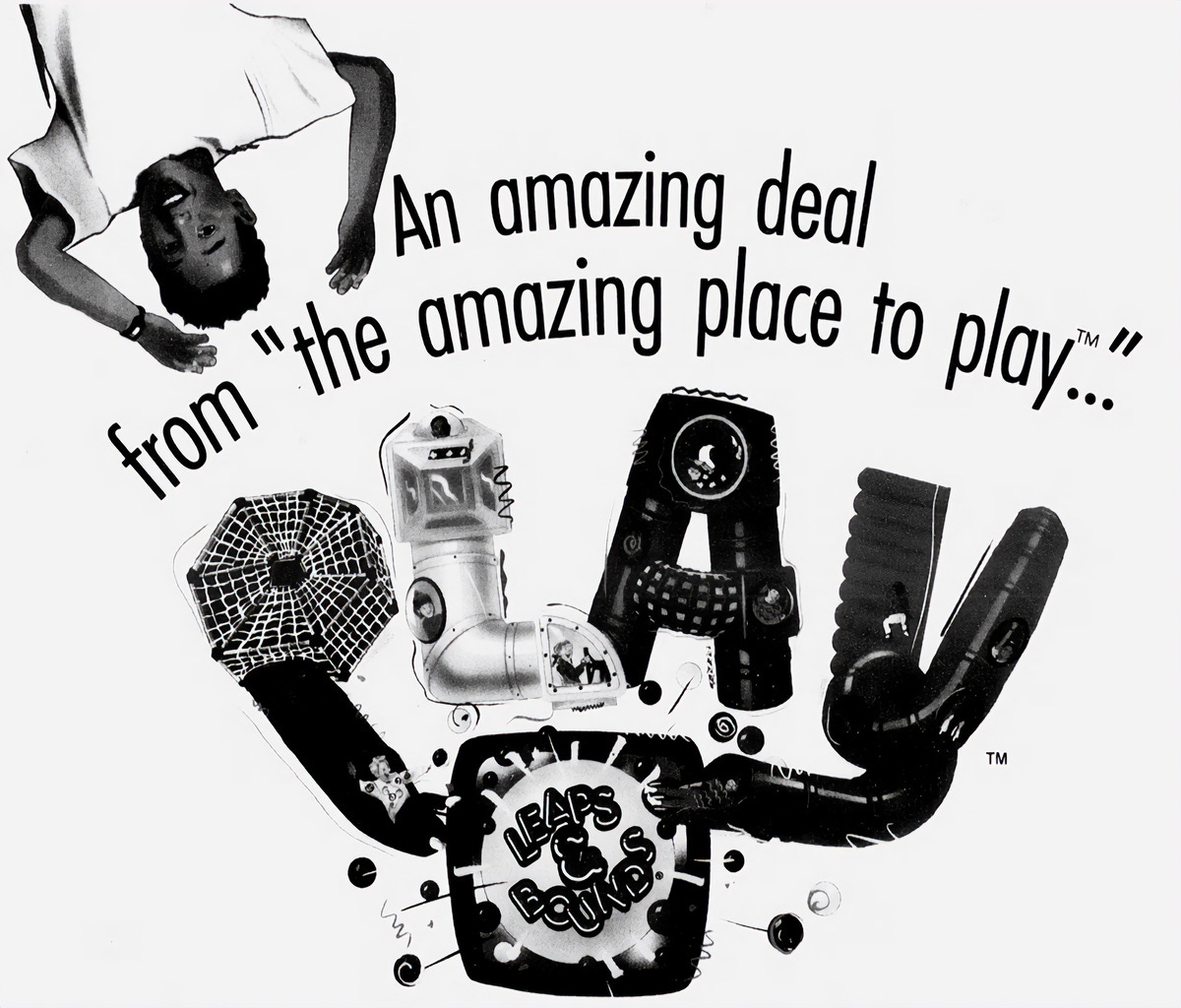
By mid 1993, Leaps and Bounds and Discovery Zone were no longer just testing an idea. They were moving into the same markets at the same time, and other companies were starting to circle the same business. George Lazarus of the Chicago Tribune wrote that new competition would make it harder to win entertainment dollars from both parents and children. Brunswick Corp., better known for bowling and billiards, had opened its own kid recreation center in Sandy, Utah, called Circus World Pizza. Brunswick’s chairman had even flown out to see the Leaps and Bounds prototype, and later told his team that he wished he had thought of it first. Indoor play had become a business that larger companies were taking seriously.
That helps explain why the next move was so surprising. In 1994, Blockbuster Entertainment announced that it was taking control of the combined operations of Discovery Zone and Leaps and Bounds as part of a three way deal. On paper, a video rental chain taking over indoor playgrounds did not seem like an obvious match, but Blockbuster was looking for ways to expand beyond movies, and Discovery Zone was trying to grow fast. As part of the deal, Discovery Zone said it would purchase its 57 franchised FunCenters for 4.5 million shares, then valued at about 90 million dollars. The combined company would operate more than 130 indoor play centers for children. McDonald’s framed the move as a way to stay focused on its global restaurant business, with chairman Michael Quinlan saying the deal would let the company keep its attention on food service. Discovery Zone bought 48 Leaps and Bounds locations from McDonald’s in August 1994.
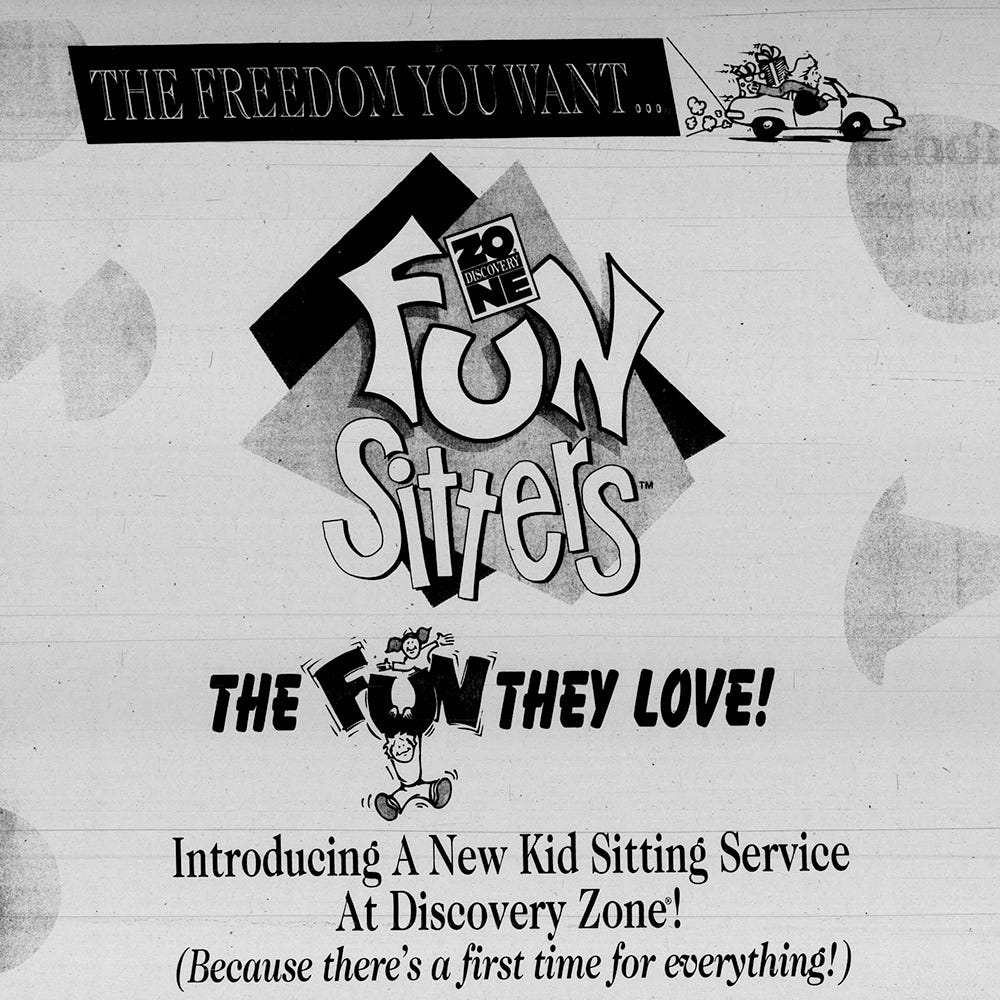
The locations that McDonald’s had built were handed over and rebranded. In Manassas, Virginia, for instance, the Leaps and Bounds at 7730 Streamwalk Lane became a Discovery Zone FunCenter with new menu items, colorful employee uniforms, and new signage. The regional marketing director told the local paper that while the name had changed, the same commitment to safety and fun would remain. Families with existing Leaps and Bounds coupons, gift certificates, and annual passes were told they would be honored through September 30, 1995. The kids using these places probably didn’t notice much of a difference.
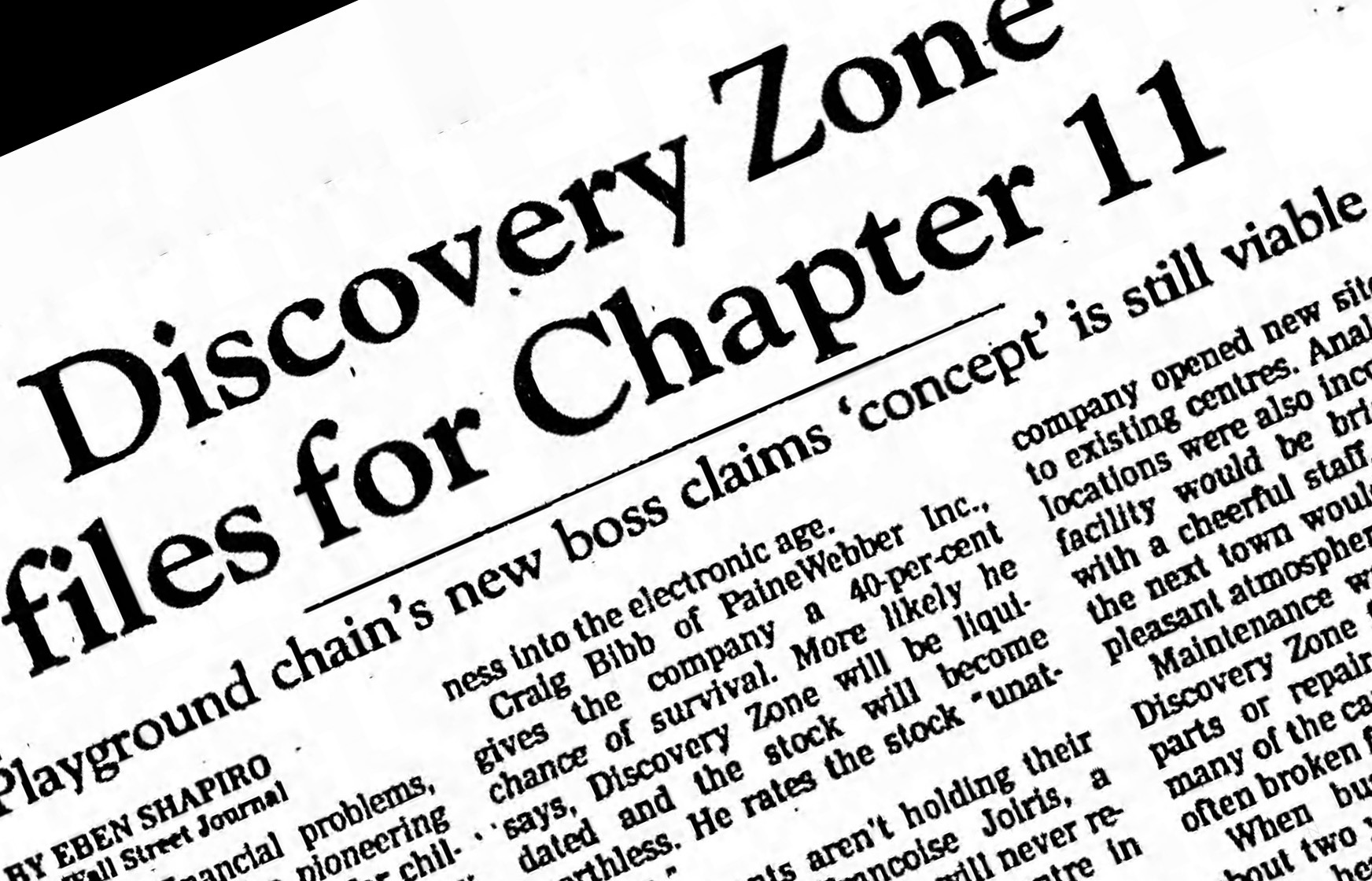
Discovery Zone, however, was not long for the world. The chain filed for bankruptcy on March 26, 1996 in Wilmington, Delaware with debts of up to $366.8 million. The company that had seemed unstoppable just a few years earlier had overextended badly. By June 1999, it had closed half its locations. In July of that year, Chuck E. Cheese’s parent company CEC Enterprises acquired most of the remaining Discovery Zone assets for $19 million. These included the name, logo, 13 fun centers, two parcels of undeveloped real estate, and the rights to seven leased properties. The spaces that McDonald’s had built had passed through two sets of hands and ultimately ended up as footnotes in the Chuck E. Cheese story.
After selling Leaps and Bounds, McDonald’s did not abandon the idea that kids wanted somewhere to play. It just kept that idea inside its own restaurants. More PlayPlaces continued to sprout up, and by 2013, the total reached 5,500. The standalone experiment ended, but the underlying concept had always been correct. Parents wanted safe, supervised places for their kids to play. McDonald’s just ultimately decided that place should come with a Happy Meal.
Leaps and Bounds lasted about three years as a McDonald’s venture. It never reached its own ambitious targets. The chain topped out at around 48 to 49 locations before the sale to Discovery Zone, well short of the 90-plus that had been projected for 1994 alone. But it was not a failure in any straightforward sense. McDonald’s entered a new market, built dozens of locations, and exited on its own terms. The concept was sound enough that a major competitor paid to take it over. And the indoor pay-to-play category it helped popularize did grow into a real industry, even if Discovery Zone ran it into the ground.
For the kids who went to Leaps and Bounds in Naperville, Cincinnati, Altamonte Springs, or anywhere else, none of the business story would have meant much. They were not thinking about McDonald’s trying to move beyond restaurants, or whether indoor play was becoming the next big family entertainment category. They were climbing through tubes and coming home tired.
I think that may be the best way to remember Leaps and Bounds. It was a short lived McDonald’s experiment, but for the kids who were the right age, it was probably just a great place to spend an afternoon. The business disappeared into Discovery Zone, and then Discovery Zone had its own problems, but the memory of places like this tends to outlast the company names.
Do you remember Leaps and Bounds? Was there one near you? I would love to know what you remember about it.
Neither of those places existed up here (I'm pretty sure), but the restaurant Play Places were an important part of our ecosystem. Our oldest was born in 95 (we're early vintage Xers). In the early 2000s, we lived in a tiny appartment, and we didn't have much at home. There was a McDonalds with a large Play Place a quick bus ride away.
On some rainy or bitter cold days, it was a life and mental health saver. A Happy Meal, a toy (some of which are still kicking around the house), and then the kids played while mom and/or dad read a book or caught up on some work, munching on a few cold left-over fries.
I would call these memories of a bleak time in our lives now, but somehow warm at the same time. I realise I haven't seen a Play Place in a long time. It was funny to read in your article that these were designed with child health and development in mind. Today, they would be designed primarily around liability concerns, which I suppose is what killed them. Along with the general move indoors of children, and the growing availability of video game consoles at home. These were "indoor outdoor" spaces. You went out to go inside when it was necessary. When it became increasingly possible to just stay inside, I guess you did that.
We saw that difference with our youngest, born in 2006. By then we were more comfortable and established. Essentially, no one went outside. It was a completely different childhood from our oldest, just ten years apart.
I was too old for these places but they always looked so much fun to me. I had no idea of the link to McDonald's!